Replacing an Old Gearmotor: How Long Is the Payback? How to Calculate ROI from Energy Savings
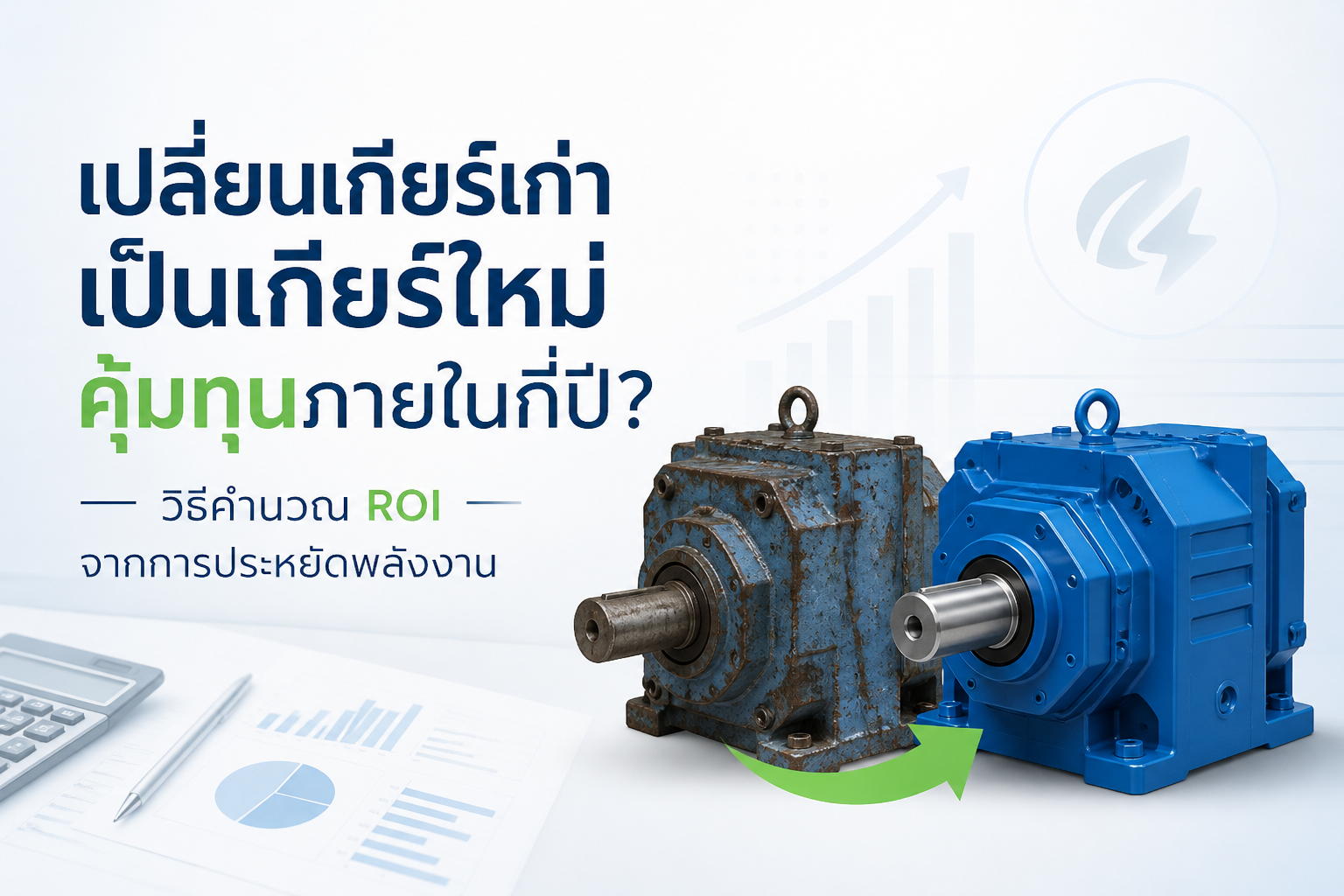
In the industrial sector, electricity is one of the highest fixed costs. Did you know that old and worn-out power transmission systems or gear motors can be unknowingly causing energy loss? Many businesses choose to repeatedly repair the same gears to save short-term costs. However, when calculating the long-term return on investment (ROI), upgrading to newer, high-efficiency gears often yields clearer and faster returns than expected.
The initial break-even point calculation starts with comparing the “power transmission efficiency rate.” Older gears or worm gears that have been in use for a long time may only have an efficiency of 60-75%, while newer IE3 standard gear motors or helical-bevel gears can achieve efficiencies as high as 90-96%. The difference in energy lost is converted into accumulated heat, meaning we are paying for electricity to generate wasted heat. The difference in kilowatt-hours (kWh) saved is then multiplied by the electricity cost per unit and the number of operating hours per year to calculate the break-even point. This will allow us to see the immediate “savings” that will be received.
A simple and popular ROI calculation formula is (cost of new gearbox – cost of repairing old gearbox) divided by (value of electricity savings per year + reduced maintenance costs). For example, if your factory operates 24 hours a day, replacing the gearbox with a high-efficiency one could save hundreds of thousands of baht in electricity costs annually. Often, the payback period can be as short as 1.5 to 3 years. After that, all the profits from the reduced electricity costs will become direct cash flow back to the business.
In addition to energy savings, replacing the gearbox also provides a return on investment in “reliability,” reducing the risk of production line downtime, which can have a cost many times greater than the cost of the gearbox itself. Therefore, an ROI assessment shouldn’t just look at the purchase price, but also at the Total Cost of Ownership (TCO), which includes longer lifespan and lower maintenance costs. Upgrading the powertrain today is not just about spending money on new equipment, but about laying the foundation for the factory’s future financial sustainability.